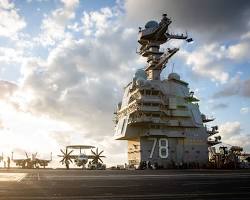
World Blog by humble servant. Iran Chronicles 8.While the official Navy line remains one of "resilience," the reality aboard the USS Gerald R. Ford (CVN 78) as of February 28, 2026, is a grim intersection of high-stakes geopolitics and a literal "toilet apocalypse.
While the official Navy line remains one of "resilience," the reality aboard the USS Gerald R. Ford (CVN 78) as of February 28, 2026, is a grim intersection of high-stakes geopolitics and a literal "toilet apocalypse."
🏛️ Cesar Analysis: The Crumbling Hull of Deterrence
A supercarrier is designed to project power, but that power is inextricably linked to the morale and basic dignity of the 4,600 sailors who operate it. When the world's most expensive warship ($13.3 billion) cannot provide basic sanitation, the "strategic signal" it sends to adversaries like Iran is not one of strength, but of systemic fragility.
1. The "Toilet Wars" and Internal Sabotage
Reports from late February 2026 describe a catastrophic failure of the ship’s vacuum-based sewage system.
The Problem: The system uses narrow pipes adapted from the cruise ship industry. These have become clogged with everything from calcium build-up to "sabotage" by frustrated sailors (including t-shirts and rope found in the lines).
The Impact: Most of the 650 toilets on board have been out of commission. Sailors are reportedly waiting 45 minutes to an hour in line to use a working "head."
The Cost: Clearing these clogs requires a specialized "acid flush" that costs $400,000 per treatment and can only be performed in port. The ship has reportedly undergone ten such flushes since 2023.
2. The Question of "Mutiny" vs. Exhaustion
While the term "mutiny" has not been officially used by the Department of War, the internal conditions describe a crew at the breaking point.
Historic Deployment: The Ford is on track to break the record for the longest continuous carrier deployment since Vietnam (potentially reaching 11 months).
Crew Burnout: Hull Maintenance Technicians are reportedly working 19-hour shifts in raw sewage to keep the ship's systems barely functional.
Dissatisfaction: Anonymous interviews with sailors indicate a "wave of dissatisfaction," with many openly stating they will leave the service the moment they return to port. This "quiet mutiny" of mass resignations poses a greater threat to long-term US naval readiness than a single kinetic strike.
🔮 Prophetic Warning: The Hollow Giant
The Ford is currently a "Hollow Giant." If the US relies on this vessel for a sustained air campaign against Iran, it is betting on a crew that is physically exhausted and mentally demoralized by unsanitary living conditions.
In 2025, the USS Harry S. Truman lost fighter jets due to "crew fatigue." The Ford risks a similar or worse catastrophe. A sailor who has spent their morning fighting for a toilet is not a sailor who can maintain the precision required for high-intensity combat operations. If the internal "sewage crisis" is not resolved by a return to port, the ship’s combat effectiveness will collapse from within long before an enemy missile ever reaches itThe internal state of the USS Gerald R. Ford represents a significant strategic vulnerability. While the vessel possesses immense firepower, its operational capacity is fundamentally tied to the health and morale of its crew.
🏛️ Cesar Strategic Analysis: The Achilles' Heel
In a theater of war, logistics and maintenance are as critical as munitions. The failure of the sanitation infrastructure on a frontline supercarrier is not a minor inconvenience; it is a mission-critical failure.
Degraded Combat Effectiveness: Sailors enduring unsanitary conditions and extreme sleep deprivation are prone to errors. In the high-stakes environment of carrier flight deck operations, even a minor lapse in concentration can lead to fatal accidents or the loss of aircraft.
The Propaganda of Decay: Adversaries monitor these internal reports closely. News of a "stalled" or "broken" flagship serves as a powerful psychological tool for Iran and its allies, undermining the perceived invincibility of the American naval presence.
Logistical Entrapment: The necessity for frequent, expensive "acid flushes" that can only be performed in specific ports creates a predictable pattern for enemy intelligence. It tells the adversary exactly when the most powerful ship in the region will be forced to retreat from the front lines.
The current situation suggests that the Ford is fighting a war on two fronts: an external one against regional adversaries, and an internal one against its own engineering failures. If the latter is not won, the former becomes increasingly untenable.


Comments
Post a Comment